
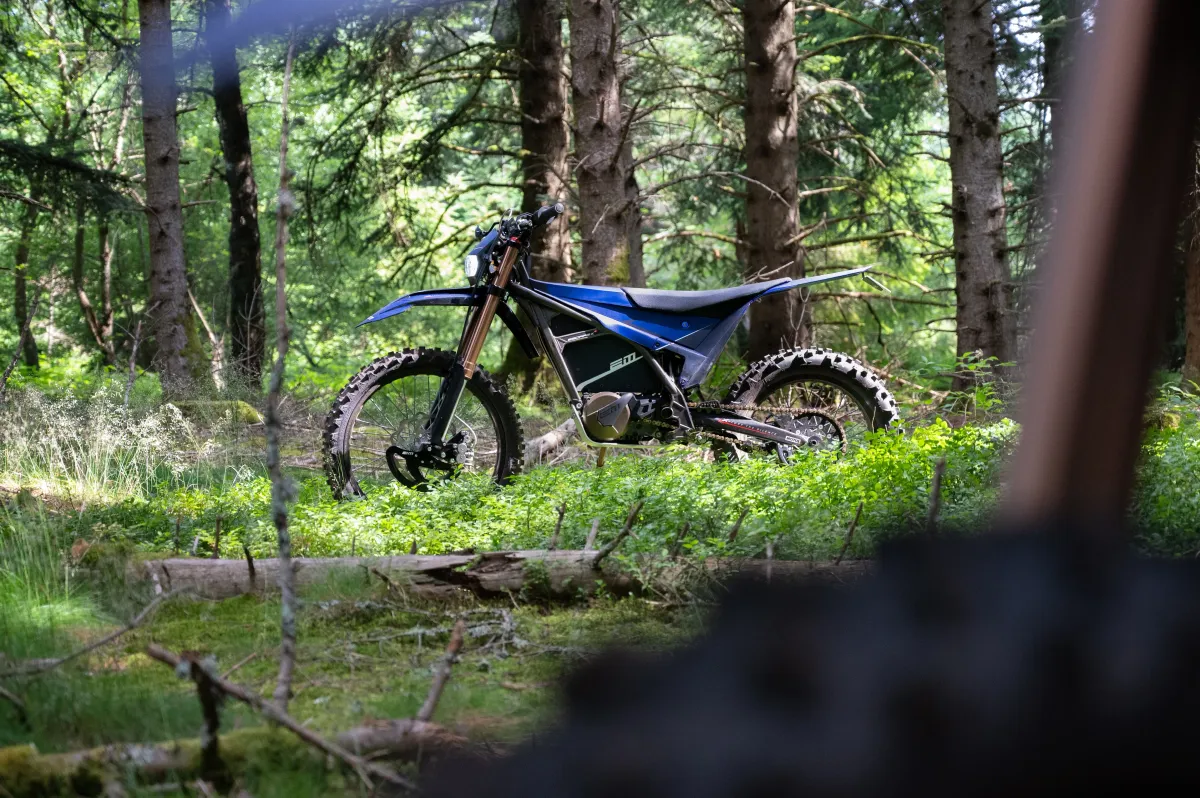
Electric Motion Escape XR+ Review: Is This Electric Enduro Bike Good ?
The Electric Motion Escape XR+ combines an 11kW electric motor, a 3.8kWh battery, adjustable suspension and a hydraulic diaphragm clutch in a claimed 90kg package. But is this French-built electric off-roader a sensible choice for beginners, or is it really designed for experienced enduro riders?
Electric off-road motorcycles are becoming increasingly capable, but the biggest challenge for manufacturers is building a bike that delivers serious performance without becoming intimidating to ride. With the Escape XR+, Electric Motion is attempting to do both.
The latest XR+ brings a new in-house-developed motor, a larger 3.8kWh battery, revised power delivery and technology designed to give riders more control over traction and acceleration. It also retains a feature that sets it apart from many electric dirt bikes: a hydraulic diaphragm clutch designed to provide more precise control at low speeds.
On paper, this is not simply a quiet alternative to a conventional trail bike. With a claimed 700Nm of torque at the wheel, peak power of 11kW and a fully adjustable rear shock absorber, the Escape XR+ is aimed at riders who want to tackle technical off-road terrain while retaining the ability to ride faster, more open sections.
I've assessed the manufacturer's specifications and equipment to look at where the XR+ makes sense, what its limitations could be, and which type of rider is most likely to benefit from it. This is a specification-based review rather than a hands-on riding test.
Electric Motion Escape XR+: At a Glance
| Specification | Electric Motion Escape XR+ |
|---|---|
| Motor | EM-developed electric motor |
| Peak power | 11kW |
| Nominal power | 6kW |
| Torque | 700Nm at the wheel, as quoted by EM |
| Battery capacity | 3.8kWh lithium-ion |
| Claimed maximum range | Up to 4 hours, depending on conditions and use |
| Claimed weight | 90kg |
| Claimed maximum speed | 90km/h off-road on a private track |
| Front suspension travel | 250mm |
| Front brake | 260mm Nissin disc |
| Rear brake | 220mm Nissin disc |
| Seat height | 850mm |
| Charger | 25A fast charger supplied as standard, according to EM |
| Connectivity | TFT display and EM Connect app |
| Road classification | 125cc-equivalent category, subject to the applicable approval and licensing requirements |
These are manufacturer-published figures, not independently measured results. Actual range, speed and charging time can vary with terrain, rider weight, temperature, riding style and battery condition.
The New Electric Motor: Is 11kW Enough for Serious Enduro?
The Escape XR+ uses a new motor developed in-house by Electric Motion. EM quotes 6kW of nominal power and a peak output of 11kW, alongside 700Nm of torque at the wheel.
That torque figure needs some context. It is a wheel-torque claim rather than a direct comparison with the crankshaft torque figures normally quoted for petrol motorcycles. It shouldn't be used on its own to conclude that the XR+ produces more usable power than a conventional enduro bike.
The more important point is how an electric motor delivers its performance. Electric drive can provide immediate response at low speeds, without the rider having to build engine revs in the way they would on a petrol motorcycle.
For technical riding, that can be a real advantage. Climbing rocky sections, negotiating awkward obstacles and finding traction on steep ground all require careful power delivery. A motor that responds predictably can make those tasks easier to manage.
EM says the new powertrain has been designed to combine strong low-speed response with a power profile intended to feel smoother and more familiar to riders accustomed to combustion engines. The company also says the motor's increased inertia improves smoothness and efficiency.
My take: the XR+'s appeal isn't just its peak output. It's the potential to deliver strong drive without constantly demanding clutch and throttle corrections. If the power delivery works as intended on the trail, that could benefit experienced riders looking for precision as much as newcomers learning to control a motorcycle.
The 3.8kWh Battery: How Far Can You Really Ride?
The XR+ gets a 3.8kWh lithium-ion battery, which Electric Motion says offers improved range without sacrificing the bike's lightweight, agile character.
The manufacturer's headline figure is up to four hours of riding. That will be an attractive prospect for riders who want to spend more time away from a charging point, but it should not be interpreted as a guaranteed four-hour enduro session.
Battery consumption depends heavily on how the motorcycle is used. Gentle trail riding and lower-speed exploration can place very different demands on the battery compared with repeated steep climbs, aggressive acceleration, deep mud or fast riding.
Hard enduro is particularly demanding because riders can spend long periods using substantial power at low speeds. A route that looks manageable on a map can become much more energy-intensive when the terrain is difficult.
My advice would be to treat the four-hour figure as a best-case manufacturer claim until independent riding tests establish what the XR+ achieves in different conditions. If you're planning long rides, work out a realistic return point and leave a sensible battery reserve rather than relying on the maximum figure.
The supplied 25A fast charger is another welcome feature. EM says it comes as standard on the XR+, reducing the need to purchase a faster charger separately. The precise charging time should still be confirmed with the dealer for the model and charging conditions in question.
Why the Hydraulic Clutch Matters
One of the most interesting features of the Escape XR+ is its three-disc hydraulic diaphragm clutch.
Many riders associate electric motorcycles with twist-and-go operation. That simplicity can be appealing, but it can also remove a control that experienced off-road riders rely on to fine-tune drive over obstacles.
The XR+'s clutch gives the rider another way to manage how power reaches the rear wheel, particularly when crawling over rocks, approaching steep climbs or trying to maintain traction at low speeds.
For experienced enduro riders, this is an important part of the package. It allows them to retain familiar clutch techniques while benefiting from electric power delivery.
For beginners, the answer is more nuanced. A clutch introduces another control to learn, but it can also help riders develop the skills required for conventional enduro riding. The immediate response of the electric motor still demands respect, so newcomers should start with conservative settings and practise in a controlled area.
The clutch is therefore not automatically a beginner disadvantage. Its value depends on whether the rider wants the simplest possible riding experience or a more traditional level of control.
Suspension and Brakes: Built for More Than Casual Trail Riding
The Escape XR+ has equipment that suggests serious off-road ambitions.
At the front, it uses an inverted 35mm fork with 250mm of travel. At the rear, EM specifies a premium shock absorber with a remote reservoir and multiple adjustment options.
That adjustability matters because off-road riding covers a wide range of conditions. A setup that feels controlled on faster, rough trails may need different settings for slow, technical terrain. Being able to adjust the rear suspension gives experienced riders more scope to tailor the bike to their weight, pace and preferred terrain.
The braking package consists of a 260mm front disc and a 220mm rear disc, both using Nissin components. Those are substantial specifications for a motorcycle with a claimed weight of around 90kg.
Low weight can be particularly valuable when riding slowly through difficult sections. It can make direction changes easier and reduce the effort involved in recovering from a mistake, although the actual handling balance will depend on the bike's geometry, weight distribution and suspension setup.
One thing to remember is that premium components don't automatically make a motorcycle suitable for every rider. Suspension still needs to be set up correctly, and a seat height of 850mm may be challenging for shorter riders who want to put both feet firmly on the ground.
EM Connect, TKO and Regenerative Braking Explained
The XR+ includes several electronic features intended to make power delivery more manageable.
EM Connect
The smartphone app allows riders to customise settings, including power and throttle response, manage TKO and lock or unlock the motorcycle. EM also says the app provides access to bike-status information.
For a rider who wants a more manageable setup for technical trails and a more responsive configuration for faster riding, adjustable settings can be useful. The important thing is to understand what each setting changes before relying on it in difficult terrain.
TKO: Power Control at Low Speeds
EM describes TKO as a system that maintains engine speed to improve acceleration precision and traction at low rpm. It can be activated or deactivated through the EM Connect app.
This could be especially helpful for riders who are learning to manage throttle input on loose ground. Predictable drive can reduce the chance of an abrupt power application upsetting the bike's balance.
However, TKO should be treated as a riding aid rather than a substitute for good technique. It cannot guarantee traction, prevent every loss of control or compensate for poor line choice.
FRB: Fixed Regenerative Braking
Fixed Regenerative Braking, or FRB, uses the motor to recover some energy during deceleration while providing a controlled braking effect.
Regeneration can be useful on descents and during changes of pace, but riders should learn how it affects the bike before tackling steep or slippery terrain. Regenerative braking is not a replacement for the conventional front and rear brakes.
EM also offers an optional PRB R system for riders seeking a different level of braking feel and progressiveness.
Is the Electric Motion Escape XR+ Good for Beginners?
Yes, it could suit some beginners, but I wouldn't recommend it automatically to every first-time motorcycle rider.
The XR+ has several characteristics that could help a newcomer. It is relatively light by off-road motorcycle standards, has no petrol engine to stall, and offers electronic adjustment intended to help tailor the power delivery. The ability to practise without changing gears could also make the early learning process less complicated for some riders.
But the XR+ is still a performance-focused off-road motorcycle. Instant electric response, an 850mm seat height and the demands of loose or uneven terrain mean that beginners still need to learn balance, braking, throttle control and safe riding technique.
Its hydraulic clutch is another consideration. Riders who want to develop traditional enduro skills may appreciate it, while those looking for the simplest possible introduction to off-road motorcycling may prefer a model with fewer manual controls.
For a beginner, I would prioritise the following:
- Power settings: use a more manageable configuration while learning, if available through the bike's settings.
- Riding environment: start on a flat, open and legal practice area before attempting steep climbs or technical trails.
- Fit: check whether the 850mm seat height and overall riding position suit your height and confidence.
- Instruction: learn braking, turning, body position and low-speed control before tackling challenging off-road terrain.
- Range planning: keep early rides short enough to return safely with battery capacity in reserve.
My verdict for beginners is that the Escape XR+ looks most suitable for someone who is keen to learn off-road riding and has access to proper instruction, rather than someone expecting a motorcycle to make difficult terrain easy from day one.
Is It Better Suited to Experienced or Professional Riders?
This is where the Escape XR+ makes its strongest case.
The combination of a hydraulic clutch, adjustable rear suspension, strong claimed wheel torque and configurable power delivery is particularly relevant to riders who already understand how to manage traction and balance.
Experienced enduro riders may appreciate the ability to tackle technical terrain without engine noise and gear changes, while still retaining familiar clutch control. Riders who enjoy exploring challenging trails could also benefit from the compact package and the ability to customise the motorcycle's response.
For competitive hard enduro, the XR+ has some promising ingredients, but the specifications alone don't establish that it can match a dedicated competition petrol bike over an entire event. Range under sustained high load, charging logistics, suspension performance at race pace and durability in extreme conditions would all need to be assessed through proper testing.
Professional riders could find it useful for specific training, technical practice or events where electric motorcycles are permitted. Whether it is the right choice for competition depends on the discipline, regulations, course length and availability of charging support.
My verdict for experienced riders: the XR+ looks like a serious electric off-road option for technical riding and exploration, rather than simply a quiet recreational bike. The strongest reason to consider it is the combination of low claimed weight, adjustable hardware and electronic control.
Electric Motion Escape XR+ vs a Petrol Enduro Bike
The XR+ should not be judged only by asking whether it can replace a petrol enduro motorcycle. The better question is which riding experience suits your needs.
| Area | Escape XR+ | Conventional petrol enduro bike |
|---|---|---|
| Power delivery | Immediate electric response, with configurable settings | Depends on engine, gearing and throttle characteristics |
| Gears | Electric drive; no conventional multi-speed gearbox | Typically uses a multi-speed gearbox |
| Clutch control | Hydraulic diaphragm clutch fitted | Conventional clutch, usually with manual gear selection |
| Noise | Much quieter powertrain operation | Combustion engine and exhaust noise |
| Energy supply | Battery capacity and charging access determine ride planning | Refuelling is usually quicker where fuel is available |
| Maintenance | No combustion engine oil changes or exhaust system, but still requires mechanical and electrical maintenance | Engine, transmission, intake, exhaust and other routine servicing |
| Long-distance use | Requires realistic battery planning and access to charging | Often easier to refuel during longer rides |
Electric power has clear advantages for riders who value quieter riding and a simpler powertrain. Petrol bikes retain a practical advantage when long rides depend on quick refuelling and there is no convenient place to recharge.
Neither option is automatically cheaper to own. Purchase price, battery lifespan, charging costs, servicing, parts availability and how often the bike is used all affect the long-term calculation.
What Are the Main Drawbacks?
The XR+ has an impressive specification, but there are several points I would want to investigate before buying one.
- Real-world range: the claimed four-hour maximum needs to be treated cautiously, particularly for hard enduro or sustained high-power riding.
- Charging access: riders who travel to remote riding areas need a clear charging plan and a realistic understanding of recharge times.
- Seat height: 850mm could make mounting and low-speed manoeuvres more difficult for shorter riders.
- Purchase price: the supplied information does not state the current UK price, so value for money cannot be judged without a dealer quotation.
- Long-term ownership: battery replacement costs, warranty terms and local parts support should be checked before committing.
- Competition suitability: riders considering racing should verify event rules and assess range and performance in conditions similar to their intended use.
These are not necessarily reasons to reject the XR+. They are the questions that matter when deciding whether an electric off-road motorcycle fits your riding habits and budget.
Is the Electric Motion Escape XR+ Worth Considering?
The Escape XR+ looks like a thoughtful development of the electric off-road concept. The new motor and 3.8kWh battery address two of the most important considerations for riders: usable performance and how long they can stay out riding.
The adjustable rear suspension, 250mm of front travel, hydraulic clutch and electronic power-control features also suggest that Electric Motion has not designed this motorcycle solely for casual trail use. There is equipment here that should appeal to riders who want to explore more challenging terrain.
For beginners, its light claimed weight and configurable response are attractive, but the power, seat height and demands of off-road riding still make instruction and sensible progression important. It is a possible first serious off-road bike for the right rider, not a substitute for learning the basics.
For experienced riders, the XR+ is arguably more compelling. It offers a combination of low weight, strong claimed wheel torque and familiar clutch control that could make it a capable tool for technical trail riding and freeriding.
The remaining question is how well those specifications translate into real-world range, traction and suspension performance. Without independent testing, I would not claim that it outperforms established petrol enduro bikes or that the four-hour range is achievable in demanding conditions.
Final Verdict: Who Should Buy the Electric Motion Escape XR+?
Best suited to: experienced trail and enduro riders, freeride enthusiasts and technically minded riders who want a high-spec electric off-roader with clutch control and adjustable suspension.
Also worth considering for: motivated beginners who want to learn off-road riding, can manage the seat height and have access to instruction and a suitable practice area.
Think carefully if: you regularly ride long, remote routes, need rapid refuelling, are working to a strict budget or want a bike primarily for competitive racing without first confirming its real-world capabilities.
My overall assessment is that the Escape XR+ is a promising electric enduro-style motorcycle with a clear focus on control, technical ability and versatility. Its specification makes it interesting for experienced riders without ruling out beginners, but its real value will depend on how the range, power delivery and chassis perform outside the brochure.
If you're considering one, I'd recommend booking a test ride and asking the dealer to demonstrate the power settings, TKO, regenerative braking and clutch feel. That will tell you far more about whether the XR+ suits your ability and riding style than the headline torque figure alone.