
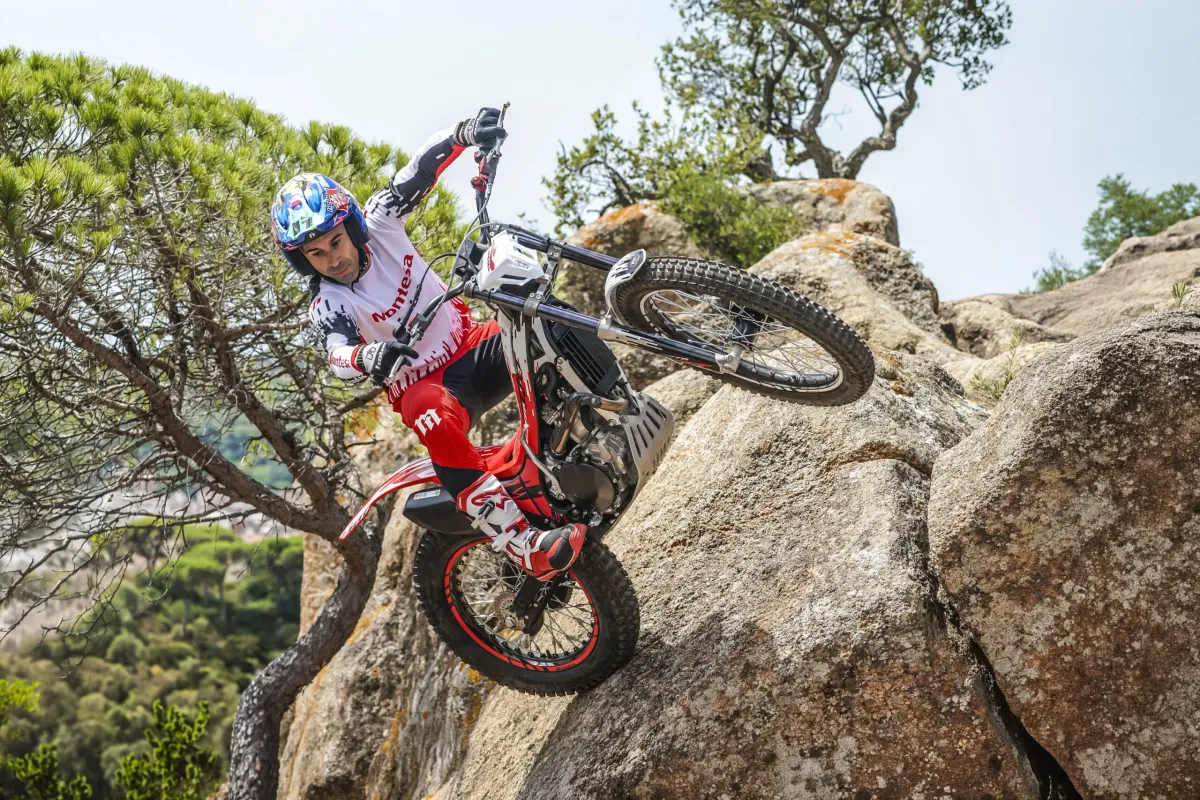
2027 Montesa Cota 301RR: The Most Race-Focused 301RR Yet?
Montesa has taken its Cota 301RR further towards the competition end of the trials market for 2027, with a revised specification centred around SHOWA suspension, competition-focused chassis components and a 298.4cc Honda four-stroke engine. But does all that race-bike hardware make the new 301RR a better motorcycle for everyone?
Montesa has never been shy about its competition heritage, but the new 2027 Cota 301RR makes its intentions particularly clear.
This is not being presented as an easy-going trail trials motorcycle or a machine designed to appeal primarily to casual riders. The 301RR is aimed directly at riders who want a competition-focused Montesa and, according to the manufacturer, is derived from experience gained at the highest levels of the sport.
For 2027, Montesa has concentrated on the areas that matter when a trials rider is pushing hard: suspension, chassis precision, engine response and competition equipment.
The result is a motorcycle that looks considerably more serious than a simple graphics update would suggest.
But there is an important question underneath all of this:
Are these upgrades genuinely useful improvements, or is Montesa simply making an already specialised motorcycle even more specialised?
Montesa Cota 301RR 2027: What's New?
The headline specification of the 2027 Cota 301RR includes a 298.4cc Honda four-stroke engine, competition-specific ECU mapping, adjustable SHOWA suspension at both ends, machined aluminium triple clamps and a Pro-Link rear suspension system.
Montesa says the engine is derived from the experience gained with its competition machinery, with the ECU mapping specifically developed to improve response throughout the rev range.
There is also a much more obvious competition theme to the chassis and equipment.
- 298.4cc Honda four-stroke engine
- Competition-specific ECU mapping
- 39mm SHOWA front fork
- 158mm front suspension travel
- SHOWA rear shock with Pro-Link system
- Adjustable front and rear suspension
- Machined aluminium triple clamps
- Machined aluminium hubs
- Competition-style solid rear sprocket
- Carbon-fibre protection components
- 310mm ground clearance
- New white, red and black colour scheme
It is a specification that tells you exactly what Montesa wants this motorcycle to be.
Race ready.
The 301RR's Engine Could Be Its Biggest Strength
At the heart of the Cota 301RR is the 298.4cc Honda four-stroke engine.
For me, this is one of the most interesting parts of the motorcycle because Montesa hasn't simply concentrated on maximum power. Instead, the emphasis is on engine response throughout the rev range.
That is exactly the sort of development that makes sense on a modern trials motorcycle.
Trials isn't about producing the biggest horsepower figure possible. The rider needs to be able to control the engine precisely when balancing on a rock, climbing a steep section or trying to generate traction on a slippery surface.
A strong but controllable four-stroke can therefore be a major advantage.
The competition-specific ECU mapping should help give the 301RR a sharper character than a more conventional setup, although exactly how noticeable that difference will be to an average club rider remains difficult to judge from specifications alone.
That distinction is important.
A professional rider may be able to exploit a small improvement in throttle response that an occasional Sunday rider simply won't notice.
SHOWA Suspension Is a Major Part of the Story
If there is one area where the 2027 Cota 301RR clearly moves towards the serious competition market, it is the suspension package.
Montesa has fitted a 39mm SHOWA front fork with 158mm of travel, while the rear uses a SHOWA shock working through the Pro-Link system.
Both ends are adjustable for preload and compression damping, giving riders considerably more scope to tune the motorcycle around their riding style and terrain.
That is a significant feature for competition riders.
Trials suspension is incredibly sensitive to setup. The difference between a motorcycle that feels settled and one that constantly moves underneath the rider can affect confidence, traction and the ability to place the bike accurately.
Having adjustment available at both ends means an experienced rider can work towards a much more personalised setup.
It also gives teams and serious competitors more opportunity to alter the bike depending on the type of sections they are facing.
But Will Everyday Riders Actually Benefit?
This is where my view becomes slightly more complicated.
The adjustable SHOWA suspension is undoubtedly attractive, but more adjustment doesn't automatically mean a better motorcycle for every rider.
A professional or expert rider is likely to understand exactly what they want from the suspension. They can experiment with settings, recognise changes in damping and alter the motorcycle according to the terrain.
A less experienced rider may simply have more settings to get wrong.
That doesn't make the suspension a bad upgrade. Quite the opposite. It means the value of the upgrade depends heavily on the rider.
For a serious clubman who is progressing quickly, the 301RR could offer useful room for development. For a beginner, much of the suspension's potential could remain unused.
Machined Aluminium Triple Clamps Add More Than Looks
The machined aluminium triple clamps are another feature that reinforces the competition character of the 301RR.
Finished in a Titanium Grey anodised treatment, they are designed around rigidity, precision and control.
That sounds like typical race-bike language, but there is a genuine reason why components such as triple clamps matter on a trials motorcycle.
The front end is responsible for giving the rider information about what the tyre is doing. When a rider is balancing the bike over an obstacle or making a precise steering correction, predictable front-end behaviour is critical.
However, there is a trade-off.
Adding stiffness or precision isn't automatically beneficial everywhere. Trials riders also need feel and compliance, particularly when riding rocks and uneven terrain. The ideal balance is therefore not simply maximum rigidity.
Montesa's approach with the 301RR appears to be about giving competition riders a more precise platform that can then be matched to the suspension settings.
The Rear Suspension Package Looks Particularly Serious
The Pro-Link rear suspension system is another key part of the 301RR package.
The rear shock works through the linkage system and, like the front, provides adjustment for setup.
Combined with the 310mm of ground clearance, this gives the motorcycle the equipment required for the sort of terrain where a trials bike is expected to repeatedly absorb impacts and maintain traction.
For an expert rider, this could be one of the most useful parts of the specification.
A rider attacking difficult sections needs a rear end that remains predictable when the motorcycle is loaded, unloaded and repositioned repeatedly.
Again, though, the difference between a highly tuned competition bike and a basic setup becomes increasingly difficult to exploit as rider ability decreases.
The 301RR Gets a Much More Aggressive Appearance
Montesa has also given the 2027 motorcycle a completely refreshed visual identity.
The new white, red and black colour scheme stretches across the front number plate, front fender, fuel tank, frame braces and rear fender, with matching wheel colours completing the package.
The black frame and components contrast with the brighter bodywork, while the RR graphics make the competition purpose particularly obvious.
I think the new colour scheme works particularly well for the 301RR.
It makes the bike look like a genuine competition special rather than simply another variation of the standard Cota.
But there is some functionality behind the styling too.
Montesa says the wider rear section of the rear fender provides additional protection from splashing in wet conditions.
That is the sort of small detail that matters far more in the real world than another set of graphics.
Competition Equipment Comes at a Cost
The 301RR also comes equipped with a number of components clearly intended to appeal to serious competitors, including machined aluminium hubs, a solid rear sprocket designed to comply with FIM competition regulations and carbon-fibre protection components.
These are not necessarily features that transform the motorcycle on their own.
What they do is reduce the amount of work required to turn the motorcycle into something suitable for serious competition.
That is an important distinction.
The buyer isn't simply paying for an engine and suspension package. They are buying a motorcycle that has already been pushed towards the competition specification.
For somebody who intends to compete regularly, that could be a major advantage.
For somebody who rides mainly for fun, it could represent equipment that they simply don't need.
Montesa's Four-Stroke Approach Remains Interesting
One of the things that continues to make Montesa interesting in the modern trials market is its commitment to the four-stroke platform.
While much of the modern trials market has become heavily associated with lightweight two-stroke machines, Montesa continues to develop its Honda-based four-stroke concept.
The 301RR therefore occupies an interesting position.
Its 298.4cc engine is larger than many traditional trials four-strokes, but the focus is still on controllable performance rather than simply chasing peak output.
For riders who enjoy the character of a four-stroke, that could be one of the biggest reasons to choose the Montesa.
The engine response, traction characteristics and overall feel will naturally be different from a comparable two-stroke.
That doesn't make one approach universally better. It gives riders a choice of how they want their trials motorcycle to behave.
Who Is the 2027 Cota 301RR Actually For?
This is probably the most important question surrounding the new motorcycle.
Montesa is very clear that the 301RR has been developed for its most demanding riders, and the specification backs that up.
For the Professional Rider
This is where the 301RR makes the most sense.
The combination of competition-focused ECU mapping, adjustable SHOWA suspension, precision chassis components and competition equipment gives an expert rider a platform with plenty of scope for fine tuning.
A professional rider can exploit changes in suspension behaviour that an average rider may never notice.
They can also make better use of the engine response and the additional precision provided by the chassis components.
For this rider, the 301RR's focus isn't a weakness.
It is the entire point of the motorcycle.
For the Expert and Serious Club Rider
This is probably the most interesting group.
A skilled club rider who competes regularly could benefit significantly from the 301RR's equipment.
The suspension adjustment alone gives the rider more opportunity to find a setup that suits their style, while the engine and chassis specification provides a serious platform to grow into.
The question becomes whether the additional cost over a less competition-focused trials motorcycle translates into measurable improvements in that rider's results.
For some riders, it absolutely could.
For others, improving technique, fitness and section reading would probably produce a bigger improvement than changing motorcycle.
For the Everyday Trials Rider
This is where I would be more cautious.
There is nothing wrong with buying a competition bike simply because you want one. Motorcycle purchases don't always have to be rational.
But if you're primarily riding green lanes, practising basic sections or enjoying occasional club events, the full specification of the 301RR may be more than you need.
You may not use the full suspension adjustment range, and the competition-focused equipment could add cost without delivering an equivalent improvement in your riding.
The 301RR is therefore a bike you buy because you want a serious competition machine, not because you simply need a trials bike.
The Good: What Montesa Has Got Right
- Competition-focused engine mapping: The revised ECU calibration targets improved response throughout the rev range.
- SHOWA suspension: High-quality adjustable suspension front and rear gives serious riders plenty of setup potential.
- Pro-Link rear suspension: A proven linkage arrangement combined with the adjustable SHOWA shock.
- Machined components: The aluminium triple clamps and hubs reinforce the precision-focused character.
- Competition equipment: The bike arrives with several features aimed directly at riders who compete.
- Four-stroke character: The 298.4cc Honda engine gives the 301RR a distinctive alternative to the two-stroke-heavy trials market.
- Strong visual identity: The new white, red and black design clearly separates the RR from a conventional trials machine.
- Race-focused development: Montesa has concentrated its specification around the needs of serious riders rather than simply changing the graphics.
The Bad: Where I Think the 301RR Could Divide Opinion
- Potentially too specialised: Everyday riders may struggle to justify all of the competition-focused equipment.
- Suspension complexity: More adjustment is useful only if the rider understands how to use it.
- Competition focus: A race-biased setup may not necessarily be the most comfortable choice for casual riding.
- Four-stroke weight and character: Riders who prioritise the lightest possible trials motorcycle may still prefer a two-stroke alternative.
- Premium equipment needs a premium price: Montesa has not supplied pricing in the information available here, but buyers should expect the RR specification to carry a premium over a more basic trials motorcycle.
Could the 301RR Change the Competition Market?
I don't think the 2027 Cota 301RR is going to completely change the trials market by itself.
What it does demonstrate, however, is that Montesa is continuing to invest in the idea of a highly developed four-stroke competition trials bike.
That matters because the trials market has plenty of lightweight two-stroke options competing for the attention of serious riders.
Montesa is taking a different route.
Rather than trying to imitate the character of a two-stroke, the 301RR doubles down on its four-stroke identity and adds competition-focused suspension, mapping and chassis equipment around it.
In my view, that is the more interesting strategy.
Montesa isn't trying to make the 301RR appeal to everybody. It is trying to make the right rider want it very badly.
The 301RR Could Become a Very Interesting 2027 Choice
The biggest question will ultimately be how the 301RR feels when ridden at competition pace.
Specifications can tell us what Montesa has changed, but they cannot completely explain how those changes interact when the motorcycle is being pushed through a difficult section.
The combination of engine mapping, SHOWA suspension, chassis precision and Pro-Link should create a highly adjustable platform, but the real advantage will come if those components work together to give the rider more confidence.
That is what a serious trials bike needs to achieve.
Not simply more performance.
More usable performance.
My Take on the 2027 Montesa Cota 301RR
I think Montesa has taken the right approach with the new 301RR.
Rather than making superficial changes, the company has concentrated on the areas that serious trials riders actually care about: suspension performance, engine response, chassis precision and competition equipment.
The SHOWA suspension is probably the biggest headline for me. Having adjustable front and rear suspension gives the 301RR the sort of setup flexibility expected from a serious competition motorcycle.
The 298.4cc Honda four-stroke engine is equally important because it maintains Montesa's identity rather than trying to copy the rest of the market.
But I don't think this is necessarily the best Montesa for every rider.
If you are an experienced competitor who understands motorcycle setup and wants a machine that can be tuned around you, the 301RR makes a very convincing case.
If you are an occasional rider who simply wants to enjoy trials, the extra competition specification may be harder to justify.
And that is actually a good thing.
The 301RR doesn't need to be everything to everyone. It needs to be an excellent competition motorcycle.
Based on the published specification, Montesa appears to have built it with exactly that objective.
Final Verdict
The 2027 Montesa Cota 301RR is an evolution of the Cota concept that pushes the motorcycle further towards serious competition use.
The 298.4cc Honda four-stroke engine, competition ECU mapping, adjustable SHOWA suspension, Pro-Link rear system, machined aluminium components and competition-focused equipment all point in the same direction.
For professional and expert riders, these changes should provide a much broader platform for extracting performance from the motorcycle.
For the everyday rider, the benefits are more complicated. The bike's quality and capability will still be attractive, but some of its most expensive features may only reveal their true value once the rider reaches a level where setup becomes critical.
That makes the 301RR a specialist motorcycle and I think Montesa has deliberately made it that way.
The 2027 Cota 301RR isn't trying to be the easiest trials bike to ride. It is trying to be the Montesa that gives a serious competitor the fewest excuses.