
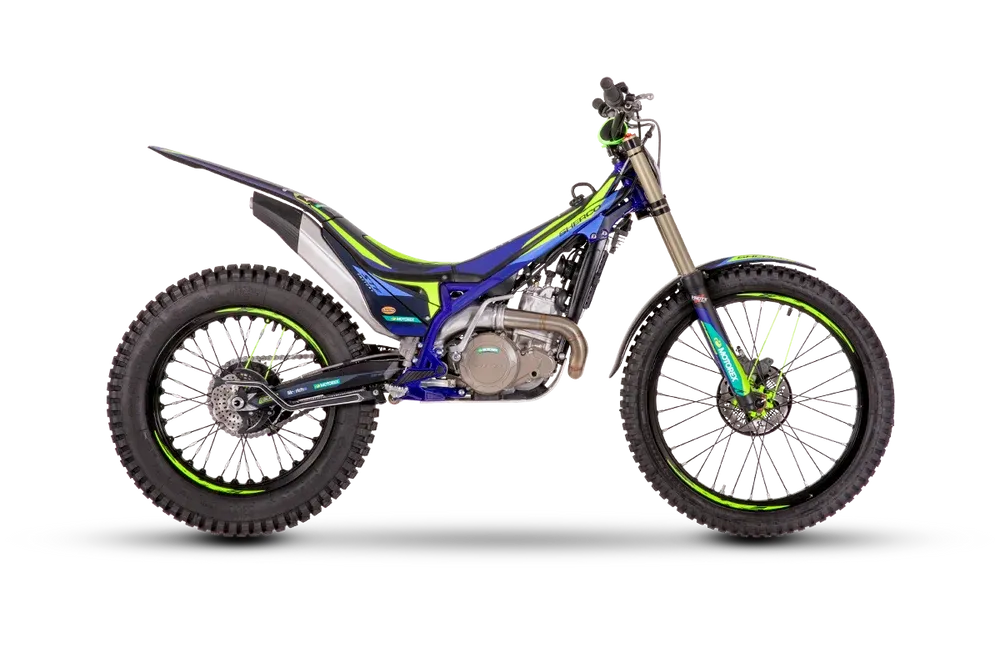
2027 Sherco 300 ST-F Factory: Full Specifications, New Updates
Sherco has introduced a number of updates to its 2027 300 ST-F Factory trials bike, aiming to improve engine response, reduce weight and give riders more control over the motorcycle. The latest model retains its 294cc fuel-injected two-stroke engine, but arrives with revised mapping, a new wider skid plate, an updated upper triple clamp and a redesigned graphics package.
The 300 ST-F Factory sits towards the competition-focused end of Sherco's trials range. Its combination of a large-capacity two-stroke engine, electronic fuel injection, hydraulic diaphragm clutch and Reiger rear suspension makes it an interesting option for experienced club riders and competitive trials enthusiasts.
However, the most important question is not simply what has changed for 2027, but what those updates mean when riding. Does the revised engine mapping make the 300 easier to control? Is the larger engine the right choice for everyone? And how does the Sherco compare with established alternatives from Beta and TRS?
What's New on the 2027 Sherco 300 ST-F Factory?
Sherco has concentrated on several practical changes for the 2027 model rather than announcing a completely new engine or chassis. The most significant update is the revised engine mapping, which the manufacturer describes as improving performance, smoothing power delivery and increasing torque.
That is an important combination for a trials motorcycle. Riders need enough immediate response to lift the front wheel, climb obstacles and generate traction, but an engine that delivers its power too aggressively can make precise control more difficult.
The new mapping is intended to improve the way the engine responds, giving riders a smoother delivery while retaining the performance expected from a 300cc competition machine. Whether every rider prefers the new character will depend on their riding style, experience and the type of sections they regularly encounter.
Other changes include a thicker and wider skid plate, a new racing upper triple clamp with six handlebar adjustment positions, revised graphics, black front brackets and a black chain tensioner.
Sherco has also removed the kickstarter as part of its weight-reduction changes. This is a notable decision on a trials motorcycle, where keeping weight low and central can make a difference when balancing, changing direction and manoeuvring through technical sections.
A fuel reserve warning light is another practical addition. It alerts the rider when the motorcycle switches to reserve, with approximately 0.6 litres remaining in the tank.
294cc Two-Stroke Engine and Electronic Fuel Injection
At the heart of the Sherco 300 ST-F Factory is a liquid-cooled, single-cylinder, two-stroke engine with a displacement of 294cc. It uses a 79mm bore and 60mm stroke, with electronic fuel injection rather than a traditional carburettor.
The fuel-injection system is an important part of the bike's character. It allows the engine management system to control fuel delivery electronically, while the revised 2027 mapping is intended to improve response and torque delivery.
Lubrication is through a 1% premix, meaning riders must mix the specified two-stroke oil with their petrol rather than relying on a separate oil-injection system. Sherco specifies SP98 fuel for the engine.
Cooling is provided by a liquid-cooling system with forced circulation, helping manage engine temperatures during demanding riding. The exhaust uses stainless-steel tubing with an aluminium silencer.
The engine is paired with a five-speed sequential gearbox, using primary gear drive and a secondary chain drive. A hydraulic diaphragm clutch provides the control needed for precise clutch work, which is particularly important when tackling steep climbs, large steps and technical obstacles.
Sherco does not publish an official horsepower or torque figure for this model in the specifications available, so it would be misleading to assign it a power output. In trials, engine response, traction and controllability are generally more useful considerations than peak horsepower figures.
Chassis, Suspension and Handling
The 300 ST-F Factory uses a tubular chrome-molybdenum steel chassis, a material commonly used in high-performance motorcycle frames because of its strength and structural characteristics.
At the front, the bike is equipped with 39mm aluminium Tech forks offering 165mm of travel. The rear uses a progressive linkage suspension system, also with 165mm of travel.
The published technical specification for the 2027 ST-F Factory lists a two-way adjustable Reiger rear shock absorber. It is worth distinguishing this from the separate BOS shock equipment mentioned in Sherco dealer information for certain 250 and 300 ST-E electric-start models; that should not be confused with the specification of the kickstart 300 ST-F Factory.
One of the more useful updates for 2027 is the new racing upper triple clamp. It offers six handlebar adjustment positions, allowing riders to alter the handlebar position to suit their height and riding style, with Sherco describing the adjustment range as extending from XS to XXL.
This is more than a cosmetic change. Handlebar position can influence how a rider moves over the motorcycle, distributes their weight and controls the front end. Having more adjustment available makes it easier to find a comfortable position, particularly for riders who are taller, shorter or have different preferences when standing on the pegs.
The new skid plate is also thicker and wider on the 250 and 300 models. Given how frequently the underside of a trials motorcycle makes contact with rocks and obstacles, additional coverage is a worthwhile practical improvement.
Brakes, Wheels and Dimensions
The Sherco 300 ST-F Factory is equipped with hydraulically operated disc brakes. The front uses a floating 185mm disc, while the rear has a 145mm disc.
Wheel sizes are the familiar trials combination of a 21-inch front and 19-inch rear, both using black Morad rims. These sizes provide the balance of obstacle clearance, grip and manoeuvrability expected from a modern trials machine.
The wheelbase measures 1,310mm, while ground clearance is 350mm. The published seat height is 704mm.
The fuel tank has a capacity of 2.2 litres. Although trials bikes are not designed for long-distance fuel range, the reserve warning light is a useful addition for riders who spend extended periods practising or competing.
2027 Sherco 300 ST-F Factory – Full Technical Specifications
Engine: Single-cylinder, two-stroke, liquid-cooled.
Displacement: 294cc.
Bore x stroke: 79 x 60mm.
Fuel system: Electronic fuel injection.
Lubrication: 1% premix.
Recommended fuel: SP98.
Cooling: Liquid cooling with forced circulation.
Starting system: Geared system with folding lever.
Exhaust: Stainless-steel tubing with aluminium silencer.
Transmission: Five-speed sequential gearbox.
Clutch: Hydraulic diaphragm system.
Ignition: Hidria digital ignition.
Frame: Tubular chrome-molybdenum steel.
Fuel tank: 2.2 litres.
Front brake: Hydraulic, floating 185mm disc.
Rear brake: Hydraulic, 145mm disc.
Front suspension: 39mm aluminium Tech fork.
Front suspension travel: 165mm.
Rear suspension: Progressive linkage system.
Rear suspension travel: 165mm.
Rear shock: Reiger, two-way adjustable.
Front wheel: 21-inch Morad black rim.
Rear wheel: 19-inch Morad black rim.
Wheelbase: 1,310mm.
Ground clearance: 350mm.
Seat height: 704mm.
Weight: No verified official figure published in the specification information consulted.
Maximum power and torque: No verified official figures published.
Who Is the Sherco 300 ST-F Factory Best Suited To?
The 300cc trials category is often associated with experienced riders, and the Sherco is no exception. Its larger engine capacity provides the potential for strong low-speed response and the ability to generate power when tackling demanding obstacles.
For experienced club riders and competitive trials enthusiasts, the 300 ST-F Factory should be an attractive option. Riders who regularly tackle steep climbs, large steps, difficult rock sections and demanding natural terrain are likely to appreciate the performance available from the larger engine.
The revised mapping could also make the bike more manageable by smoothing its response, although it would be wrong to assume that a 300cc two-stroke automatically becomes easy for a beginner simply because the power delivery has been refined.
For newer riders, a 125cc or 250cc trials bike may be a more sensible starting point. A smaller-capacity engine can be less intimidating and may allow a developing rider to concentrate on balance, body position, clutch control and accurate throttle use rather than managing a larger engine.
That does not mean a 300 is unsuitable for every club rider. Some less experienced riders prefer the flexibility of a larger engine, particularly if they are physically confident and already have experience on motorcycles. The important point is choosing a capacity that suits ability and riding conditions rather than assuming that bigger is always better.
How Does the Sherco Compare With Beta and TRS?
The 300 ST-F Factory competes in a strong market. Beta, TRS, Montesa, Vertigo and other specialist manufacturers all offer trials motorcycles aimed at riders looking for high levels of performance and control.
One of its closest alternatives is the Beta Sincro 300. Beta's newer Sincro family has been developed around a redesigned engine and hydroformed aluminium frame, with the manufacturer placing particular emphasis on balance, fluidity and the connection between rider and motorcycle.
That gives the two bikes different technical identities. Sherco retains a tubular chrome-molybdenum steel chassis and a two-stroke fuel-injected engine, while Beta's Sincro range introduces a new frame and engine platform. Which approach works best will ultimately come down to rider preference, setup and the way each motorcycle behaves on the sections.
TRS is another important competitor. Its ONE R 300 is an established option in the premium two-stroke trials market, and it will appeal to riders looking for a competition-focused machine from a manufacturer dedicated to trials.
The Sherco's revised mapping, six-position handlebar adjustment and wider skid plate give it some useful talking points for 2027. However, it would be unfair to claim that it is automatically better than the Beta or TRS without comparable independent testing on the same sections and under the same conditions.
There is also the question of dealer support, parts availability and servicing. Trials motorcycles are often bought by riders who keep them for several seasons, so the quality of the local dealer and access to parts can be just as important as the specification sheet.
Price and Value for Money
UK dealer listing information places the 2027 Sherco 300 ST-F Factory at an advertised price of £7,999. Buyers should confirm the final on-the-road price, delivery costs and availability with their chosen dealer.
That puts it firmly in the premium trials-bike market. At this level, buyers should expect competition-focused components, quality suspension and a motorcycle designed for serious off-road use.
The value of the 2027 updates will depend on the individual rider. The revised mapping and adjustable triple clamp could make a genuine difference to how the bike feels, while the stronger skid plate is a practical improvement for anyone regularly riding rocky terrain.
The removal of the kickstarter is more of a trade-off. It reduces weight, but riders should understand the starting arrangements and ensure they are comfortable with the system before buying. It is always worth asking a dealer to demonstrate the starting procedure and explain what support is available if the mechanism needs attention.
Our Verdict: Is the 2027 Sherco 300 ST-F Factory Worth Considering?
The 2027 Sherco 300 ST-F Factory is an evolution of an established competition trials platform rather than a completely new motorcycle. Its most important updates are focused on making the engine more refined, improving rider adjustment and adding practical protection underneath the bike.
The revised engine mapping is arguably the most significant change. A 294cc two-stroke needs to deliver strong performance while remaining controllable, and Sherco's stated aim of smoother power delivery alongside increased torque is exactly the kind of development that matters in trials riding.
The six-position handlebar adjustment is another welcome addition, as is the thicker and wider skid plate. Neither change is revolutionary on its own, but both address real requirements for riders who use their motorcycles regularly.
My view is that the 300 ST-F Factory is best suited to experienced riders who want a high-performance two-stroke for club competition, demanding practice sessions and technical natural sections. It should also appeal to riders who already know they prefer the response and character of a 300cc engine.
For beginners or riders who prioritise a softer, less demanding motorcycle, I would seriously consider the 250cc version before choosing the 300. The best trials bike is not necessarily the one with the biggest engine; it is the one that allows the rider to develop control, confidence and consistency.
Against the Beta Sincro and TRS ONE R, the Sherco has a strong specification and some worthwhile 2027 refinements. But the final decision should come down to how each bike feels under the rider, the quality of local dealer support and the type of trials being ridden.
The 2027 Sherco 300 ST-F Factory looks like a well-considered update to an established trials machine. It has not reinvented the category, but it has concentrated on the details that could make a difference when the riding gets difficult.