
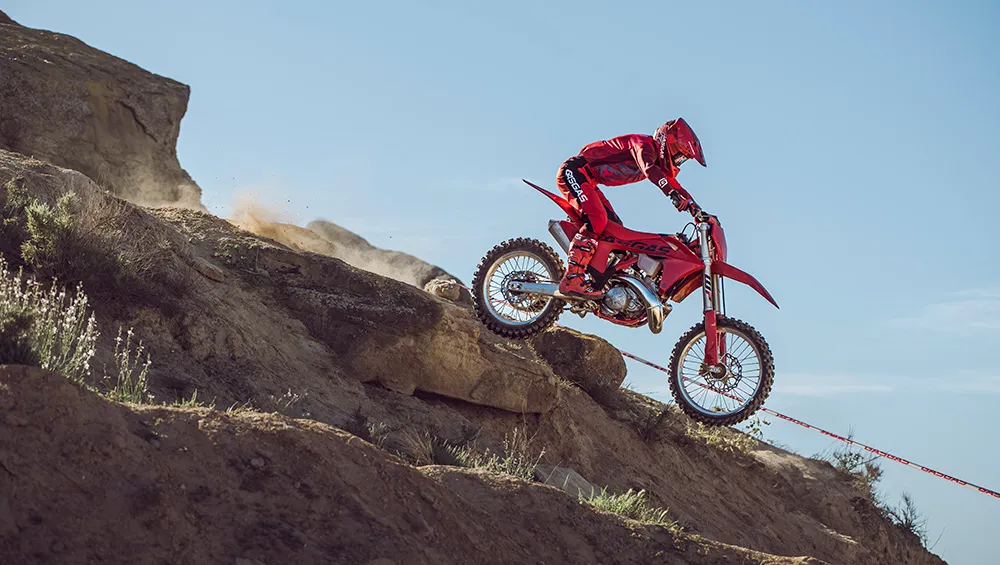
2027 GasGas EC 300 Revealed: Is This the Ultimate Weekend Hard Enduro Bike?
GasGas has updated its EC 300 for 2027, bringing fresh styling and a range of carefully considered refinements to its popular 293cc two-stroke enduro motorcycle. With electronic fuel injection, electric start, oil injection, WP suspension and a six-speed gearbox, the EC 300 is designed to tackle everything from technical woodland trails to demanding hard enduro terrain.
Rather than completely redesigning the motorcycle, GasGas has concentrated on refining an established platform. The 2027 model features updated red-and-black graphics, revised handlebar mounts, a grippy black seat cover and further chassis refinements developed with input from the GasGas Factory Racing team.
At £9,349 including VAT, dealer delivery and pre-delivery inspection, the EC 300 sits firmly in the premium enduro market. But who is this motorcycle really designed for? Is it a machine primarily intended for professional racers, or does it offer more to the experienced weekend rider who enjoys exploring technical terrain?
2027 GasGas EC 300: what's new?
The most obvious changes for 2027 are visual. The familiar GasGas red bodywork now features stronger black detailing, complemented by black rims, a black handlebar and a black seat cover. The graphics use in-mould technology, with the design integrated into the plastic rather than relying on conventional surface-applied stickers.
The motorcycle also gets Neken handlebars mounted in redesigned bar clamps intended to reduce the likelihood of the bars twisting during an impact. Medium-compound ODI lock-on grips complete the updated handlebar setup.
Underneath the new appearance, GasGas has continued refining the frame. Changes to the upper shock mount, material thickness and engine mounting points are intended to improve the balance between handling and stability. GasGas states that the latest material and component changes save 300g, although this should not be confused with a 300g reduction in the motorcycle's overall weight.
These are evolutionary changes rather than a completely new generation. The EC 300 retains its established engine and chassis concept, with attention focused on improving the details that influence how the motorcycle performs on the trail.
293cc two-stroke engine with electronic fuel injection
At the centre of the EC 300 is a 293.15cc, single-cylinder, liquid-cooled two-stroke engine. Unlike older carburetted enduro motorcycles, the 2027 GasGas uses Keihin electronic throttle-body injection, with a 39mm throttle body controlled by the Vitesco Technologies engine management system.
The injection system continuously monitors information including air temperature, coolant temperature, crankcase pressure, engine speed and throttle position. The ECU uses these inputs to manage fuel delivery and ignition, with the aim of providing consistent engine operation across changing riding conditions.
One particularly interesting feature is the electronically controlled exhaust system. Instead of a conventional mechanical power-valve arrangement, the EC 300 uses electronic exhaust-port control, opening the lateral exhaust ports before the main exhaust port.
GasGas says this arrangement helps produce smooth, strong and accessible power delivery. For enduro riders, that is an important characteristic. A 300cc two-stroke has the capacity to produce substantial drive, but the ability to control that power at low speeds is often more valuable than outright peak performance when negotiating technical climbs or slippery sections.
GasGas has not published an official horsepower or torque figure for the 2027 EC 300, so it would be misleading to attach an estimated power output to the motorcycle.
No more premixing: the EC 300 has electronic oil injection
One of the most practical features of the EC 300 is its electronically controlled oil injection system. Rather than requiring riders to premix two-stroke oil with every tank of fuel, the motorcycle has a dedicated oil tank and an electronic pump controlled by the engine management system.
The pump adjusts oil delivery according to how hard the engine is working. GasGas quotes an average fuel-to-oil ratio of approximately 60:1, while a warning light alerts the rider when the oil level becomes low.
For weekend riders, this is a genuinely useful feature. Preparing fuel before every ride is one of the routine jobs associated with traditional two-stroke ownership, and removing the need to premix makes refuelling considerably more convenient.
It also means riders need to remember to check the separate oil supply rather than assume that the engine requires no attention. The system manages delivery, but the oil reservoir still needs to be maintained correctly.
Six-speed gearbox and DDS clutch
The EC 300 features a wide-ratio six-speed gearbox designed specifically for enduro riding. Having a broad range of gears is important when one ride can include fast open sections, technical woodland, steep climbs and slow, rocky obstacles.
The clutch is a Damped Diaphragm Steel (DDS) multi-disc wet design, operated hydraulically through a BrakTec system. Instead of conventional coil springs, the DDS arrangement uses a single diaphragm spring and incorporates damping within the clutch assembly.
GasGas says this setup provides a light lever action, consistent clutch engagement and improved traction and durability. The clutch basket and inner hub are also designed to maintain oil supply and cooling.
For riders tackling technical enduro, clutch control is essential. Being able to modulate drive accurately can make a significant difference when climbing steep terrain or negotiating obstacles where maintaining traction is difficult.
WP suspension and a refined chassis
The 2027 EC 300 uses a central double-cradle steel frame manufactured from 25CrMo4 steel, combined with an aluminium rear subframe and a cast aluminium swingarm.
Suspension is provided by WP, with 48mm XPLOR open-cartridge forks at the front and a WP XACT linkage-mounted rear shock. Both ends offer 300mm of suspension travel.
The front fork has separate hand-adjustable compression and rebound settings, allowing riders to make changes to suit the terrain without immediately needing specialist tools. The rear shock features dual compression adjustment and a rebound adjuster.
This adjustability is particularly useful for riders who move between different types of enduro. A setup that works well on fast, rough trails may not be ideal for slow technical sections, so being able to fine-tune suspension is a practical advantage.
GasGas has also focused on mass centralisation and reducing vibration. The engine uses a counter-balancer shaft to reduce vibration, while the revised frame details are designed to balance responsive handling with stability over rough ground.
Brakes, tyres and practical enduro equipment
Braking is handled by BrakTec components, with a 260mm front disc and 220mm rear disc. The wheel combination consists of a 21-inch front and 18-inch rear, fitted with Maxxis MaxxEnduro tyres. The rear uses the softer MaxxEnduro Soft compound to prioritise traction.
The larger footpegs provide more surface area for rider grip and are shaped to reduce the likelihood of catching on deep ruts. The slim bodywork also provides contact areas that help riders grip the motorcycle with their legs when standing or moving around the bike.
Other practical details include a tool-free air-filter access system, a transparent approximately nine-litre fuel tank and an integrated fuel pump designed to allow more fuel to be used from the tank.
The cooling system uses compact aluminium radiators positioned close to the motorcycle's centre of gravity. GasGas offers an optional radiator fan for situations where the bike spends extended periods travelling slowly through technical terrain. Buyers should check whether this is included in a particular dealer's specification rather than assume it comes as standard.
2027 GasGas EC 300 technical specifications
| Specification | Details |
|---|---|
| Engine | Single-cylinder, two-stroke |
| Displacement | 293.15cc |
| Bore × stroke | 72 × 72mm |
| Fuel system | Keihin EFI, 39mm throttle body |
| Engine management | Vitesco Technologies EMS |
| Oil system | Electronic oil injection |
| Starting | Electric starter |
| Battery | 2Ah |
| Transmission | Six-speed |
| Clutch | DDS wet multi-disc, BrakTec hydraulics |
| Frame | 25CrMo4 steel central double-cradle design |
| Rear subframe | Aluminium |
| Front suspension | 48mm WP XPLOR USD fork |
| Rear suspension | WP XACT linkage-mounted monoshock |
| Suspension travel | 300mm front / 300mm rear |
| Front brake | 260mm disc |
| Rear brake | 220mm disc |
| Fuel capacity | Approximately 9 litres |
| Weight without fuel | 107.6kg |
| Seat height | 956mm |
| Wheelbase | 1,489mm |
| Ground clearance | 354mm |
| Wheels | 21-inch front / 18-inch rear |
| Tyres | Maxxis MaxxEnduro front / MaxxEnduro Soft rear |
| UK base price | £9,349 |
Is the GasGas EC 300 best for professional racers or weekend riders?
This is where the EC 300 becomes particularly interesting. Although it has the engine capacity and equipment to compete at a high level, its specification suggests that GasGas has developed a motorcycle with a much broader appeal than professional racers alone.
For the weekend enduro rider
I would argue that the EC 300 is particularly well suited to experienced recreational riders who enjoy technical trails, woodland riding, steep climbs and occasional hard enduro events.
The combination of electronic fuel injection, oil injection and electric starting removes some of the routine inconvenience associated with traditional two-stroke ownership. Riders do not have to premix fuel, while the counter-balancer shaft is designed to reduce vibration and help limit fatigue on longer rides.
The engine's electronically managed power delivery is another important feature. A 300cc two-stroke can be a demanding motorcycle, but GasGas has specifically developed the exhaust-port control system to provide smooth and manageable delivery rather than relying on an old-fashioned aggressive power-valve response.
The WP suspension is also adjustable, giving weekend riders the opportunity to adapt the bike to their ability and the conditions they encounter.
My assessment: The EC 300 makes a lot of sense for the experienced weekend rider who wants a capable motorcycle for technical terrain without having to build a hard-enduro machine from scratch. It is not necessarily an ideal first enduro bike for a complete beginner, though. The 293cc capacity, 956mm seat height and performance-focused chassis require a reasonable level of confidence and control.
For professional and competitive enduro riders
There is plenty in the EC 300 specification to interest competitive riders. The lightweight steel frame, adjustable WP suspension, wide-ratio gearbox, DDS clutch and electronic engine management provide a strong foundation for competition.
The map-select switch is particularly worth mentioning. GasGas lists a two-map option available through its dealer network. Map 1 is intended to provide a softer response for slow technical sections, while Map 2 gives a more direct response for deeper mud and softer terrain.
This is a useful feature for riders who compete across different conditions. However, the map-select switch is listed as available from a GasGas dealer, so buyers should confirm whether it is included or requires an additional purchase.
The frame development has also involved GasGas Factory Racing, with the manufacturer focusing on stability, steering response and reduced weight in selected components.
That makes the EC 300 a credible competition platform, but professional racers may still want to alter suspension settings, gearing, protection and other components to suit their individual requirements and race conditions. It is important to remember that the standard EC 300 is not the same model as a fully prepared factory race bike.
Our verdict: who should buy the 2027 GasGas EC 300?
The 2027 GasGas EC 300 is a well-equipped, modern two-stroke enduro motorcycle that places a strong emphasis on rideability and technical performance.
Its electronic fuel injection and exhaust-port control aim to provide predictable power, while electronic oil injection removes the need for premixing. Add electric start, a counter-balancer shaft, adjustable WP suspension and a six-speed gearbox, and the result is a package that should appeal to riders spending long days on challenging terrain.
For me, the biggest attraction is how well the specification suits the experienced weekend rider. You get a capable 300cc two-stroke with the technology and equipment to tackle demanding enduro routes, without necessarily needing to be a professional racer to appreciate what it offers.
That said, serious competitors should not dismiss it. The chassis and suspension provide a strong starting point for racing, and the electronic systems offer useful options for adapting the bike to different conditions.
At £9,349, it is a substantial investment, but the 2027 EC 300 offers much more than a new set of graphics. It combines modern engine management with practical ownership features and a chassis designed for technical enduro.
My conclusion: The GasGas EC 300 is arguably at its most appealing in the hands of the experienced weekend enduro rider who wants to tackle everything from ordinary trail rides to challenging hard enduro terrain. Professionals can certainly make it competitive, but its combination of manageable power, convenience and long-ride comfort makes it a motorcycle that shouldn't be viewed as a machine exclusively for racers.