
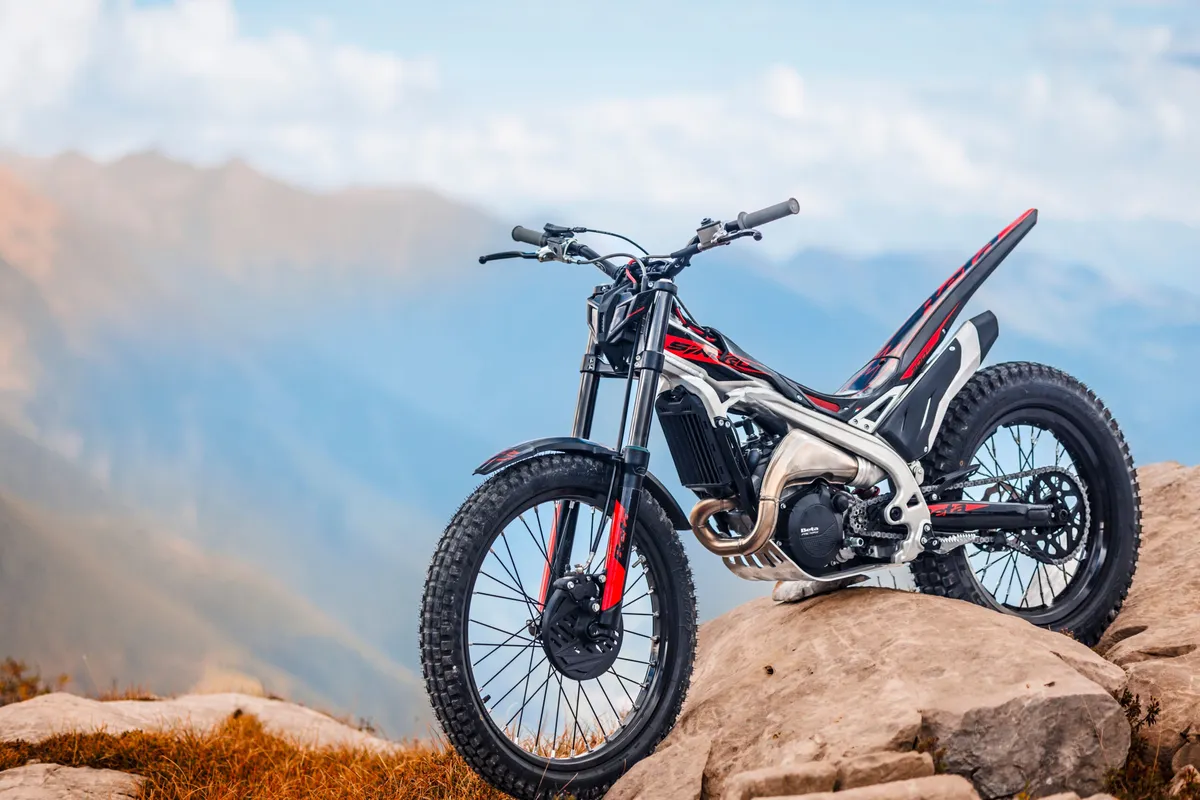
2027 Beta Sincro Trials Range Revealed
Beta has updated its Sincro trials motorcycle range for 2027, introducing revised engine settings, suspension refinements, fresh black-and-red graphics and, most importantly, electric-start options for riders who want greater convenience on the trials bike.
Building on the redesigned Sincro platform launched for the 2026 model year, Beta has concentrated on improving how the motorcycle responds to rider input rather than replacing an already modern design. The result is a range aimed at everyone from riders developing their technique to experienced competitors looking for precise control over difficult terrain.
The headline addition is E-Start, which joins the kick-start models on selected engine sizes. Beta has also updated the combustion chamber and spark plug, revised the ECU and refined the suspension settings. The 300cc models receive additional exhaust changes intended to improve engine response while retaining progressive power delivery.
But with 125cc, 250cc, 300cc and 300 SS versions available, which 2027 Beta Sincro should you choose? And is electric start worth the additional weight for a competition rider?
What's new on the 2027 Beta Sincro?
Revised engine for smoother throttle response
Beta has introduced a smaller CMR7H spark plug, positioned vertically in a redesigned cylinder head. The revised combustion chamber is intended to improve internal flow, helping the engine deliver a more precise response to throttle inputs.
For trials riders, that is an important area to develop. Unlike motocross or enduro riding, where maintaining momentum can often be the priority, trials demands finely controlled bursts of power. A small change in throttle input can determine whether the front wheel clears an obstacle or lands exactly where the rider intended.
The updated ECU also features revised internals and new mapping, with Beta targeting improved reliability and more consistent engine management. These changes should help the Sincro deliver a more predictable response, although independent testing will be needed to establish exactly how much better the 2027 models perform compared with their predecessors.
Suspension refinements across the range
The 2027 Sincro retains its hydroformed aluminium frame with an integrated fuel tank, R16V front fork and lightweight aluminium-bodied rear shock. Beta has refined the suspension settings to improve the balance between sensitivity, support and traction.
That balance matters when riding over slippery rocks, roots and uneven ground. Suspension needs to absorb impacts without making the motorcycle feel vague, while maintaining enough support for controlled weight transfers and precise wheel placement.
These are refinements rather than a completely new chassis. Beta is building on the platform introduced for 2026, with the goal of improving the connection between rider and motorcycle.
More development for the 300 and 300 SS
The 300cc models receive a revised silencer with a more linear internal structure designed to optimise exhaust flow and improve engine response. The 300 SS also has a dedicated exhaust header intended to promote smoother power delivery.
This is especially interesting for riders who want the pulling power of a 300cc two-stroke but prefer an engine that can be controlled precisely at low speed. In trials, usable power is often more valuable than an aggressive response that makes the rear tyre spin or causes the front wheel to lift unexpectedly.
The 300 SS is the version to consider for riders who specifically want Beta's Super Smooth approach to power delivery. It retains the 296.5cc engine capacity of the standard 300 but uses its dedicated exhaust header to pursue a smoother character.
Beta Sincro E-Start: is electric start worth it?
The biggest practical change for 2027 is the introduction of E-Start versions alongside the kick-start models. The system uses a compact starter motor, dedicated lithium battery, relay and handlebar control, adding approximately 1.9kg to the motorcycle.
Beta's aim is to make restarting the engine easier, particularly during longer rides or when a rider stalls repeatedly on technical terrain. Anyone who has struggled to restart a bike in an awkward position on a steep hillside will understand why that could be a welcome feature.
For recreational riders, club-level competitors and anyone who spends long days exploring technical trails, I think electric start is one of the most useful developments in the updated range. It removes some of the hassle of restarting and allows the rider to concentrate on recovering their balance and planning the next section.
For competition riders who prioritise minimum weight and mechanical simplicity, the standard kick-start version still makes a strong case. Beta puts the additional weight of E-Start at just 1.9kg, but the lightest possible configuration may still appeal to riders who are focused on competition.
It is worth noting that the 125cc is not offered with E-Start in the range information supplied by Beta. The electric-start option is available on the 250, 300 and 300 SS, alongside their kick-start counterparts.
Which 2027 Beta Sincro is best for you?
Beta Sincro 125: best for developing technique
The 125cc Sincro is the option I would look at first for newer adult trials riders who want a motorcycle that encourages them to develop good technique rather than rely on engine capacity.
A smaller-capacity engine can encourage riders to focus on clutch control, balance, momentum and accurate throttle use. It can be a useful platform for learning how to lift the front wheel, manage slippery climbs and approach obstacles without relying on a large burst of power.
There is a trade-off, however. A 125cc engine may require more precise clutch work and momentum management when faced with particularly steep climbs or large obstacles. It is not automatically the easiest bike for every beginner, especially someone who is heavier, already experienced in another off-road discipline or regularly rides demanding terrain.
Best suited to: developing trials riders, riders who enjoy refining technique and those who prefer a smaller-capacity two-stroke.
Beta Sincro 250: the all-round choice
For many club riders, the 250cc Sincro looks like the most versatile starting point in the range. It sits between the smaller 125 and the higher-capacity 300 models, making it a sensible option for riders who want a motorcycle they can grow with as their confidence improves.
A 250 can offer a useful balance between manageable power and the ability to tackle more demanding terrain. It should suit riders progressing beyond beginner sections, entering club trials or looking for a machine that can handle a broad range of riding situations.
The revised combustion chamber and ECU are particularly relevant to the model's overall usability, although only a proper ride comparison will show how noticeable the 2027 changes are.
I'd put the 250 near the top of the list for a rider who has some experience and wants one bike for regular practice and competition. Less experienced riders should still consider how comfortable they are with two-stroke clutch and throttle control before choosing.
Best suited to: club-level riders, developing competitors and experienced riders wanting an all-round trials motorcycle.
Beta Sincro 300: for experienced riders and demanding terrain
The standard 300cc Sincro is aimed at riders who want the characteristics of a larger-capacity trials engine. Its 296.5cc displacement, revised combustion chamber and new silencer make it an interesting choice for technical riding where the rider needs to manage power carefully.
More capacity can be useful when tackling steep climbs or obstacles that demand strong drive, but it does not automatically make a bike faster or easier. A larger engine can also expose shortcomings in clutch control and throttle discipline if the rider is not yet comfortable managing its response.
For an experienced rider who competes regularly and is comfortable controlling a 300cc two-stroke, the standard Sincro 300 deserves serious consideration. For a newer rider, I would choose it based on proven ability and riding preference rather than assuming that more engine capacity is always better.
Best suited to: experienced trials riders, confident competitors and riders who regularly tackle demanding sections.
Beta Sincro 300 SS: for riders who want a smoother 300
The 300 SS shares the standard 300's engine capacity but has a dedicated exhaust header designed to promote smoother power delivery. That makes it an appealing option for riders who want the benefits of a 300cc engine without choosing a version primarily for a more aggressive character.
In trials, smooth delivery can be particularly valuable on slippery climbs, technical rock sections and obstacles where maintaining traction matters more than producing a sudden burst of power. A controllable engine can help a rider apply drive progressively and make corrections without upsetting the bike's balance.
The SS could therefore suit experienced riders who want a 300 but place a high value on predictable delivery. It may also interest a developing rider who is already comfortable on larger-capacity trials bikes, but the 300cc displacement means it should not automatically be treated as a beginner model.
Best suited to: experienced riders who favour smooth, progressive power delivery and precise control over technical terrain.
Quick comparison: which Beta Sincro should you buy?
| Model | Who should consider it? | My assessment |
|---|---|---|
| Sincro 125 | Newer riders and technique-focused riders | A sensible place to start if learning control is the priority. |
| Sincro 250 | Club riders and developing competitors | The most versatile option for riders wanting room to progress. |
| Sincro 300 | Experienced riders and demanding competition | Best considered by riders who can confidently manage a larger-capacity engine. |
| Sincro 300 SS | Riders seeking smooth, progressive 300cc power | An appealing option for technical terrain where traction and control are priorities. |
These are recommendations based on engine size and the published technical changes, not the result of a back-to-back test. Rider ability, preferred terrain and local competition grades should all influence the final decision.
2027 Beta Sincro UK prices and availability
UK dealer listings currently show the 2027 Sincro 125 at £6,445, while the kick-start 250 and 300 are listed at £6,995. The 250 and 300 E-Start versions are listed at £7,495. Prices and availability can vary by dealer, and buyers should check directly for the 300 SS price and the exact specification of their preferred model.
The new black-and-red graphics give the range a sharper appearance, but the more meaningful changes are beneath the bodywork: revised engine management, combustion chamber and suspension settings, plus the new electric-start option.
Our verdict: a more useful Sincro range for 2027
The 2027 Beta Sincro range is an evolution rather than a ground-up redesign. Beta has concentrated on the way the motorcycle responds to the rider, while adding electric start for those who value easier restarting over the lowest possible weight.
For newer riders, the 125 is worth considering as a technique-focused option, while the 250 looks like a sensible all-round choice for riders developing their skills and entering club competition. Experienced riders can choose between the standard 300 and the 300 SS according to their preferred power delivery and the terrain they ride most often.
The E-Start models may be the biggest quality-of-life improvement for riders who spend hours practising or exploring technical trails. Competition purists, meanwhile, still have the kick-start option when minimum weight and simplicity take priority.
Ultimately, the best Sincro is not necessarily the one with the largest engine or the most equipment. It is the model that gives the rider the confidence to place the wheels accurately, control traction and keep improving. Those are the qualities that matter most in trials, and they are exactly the areas Beta says it has been refining for 2027.