
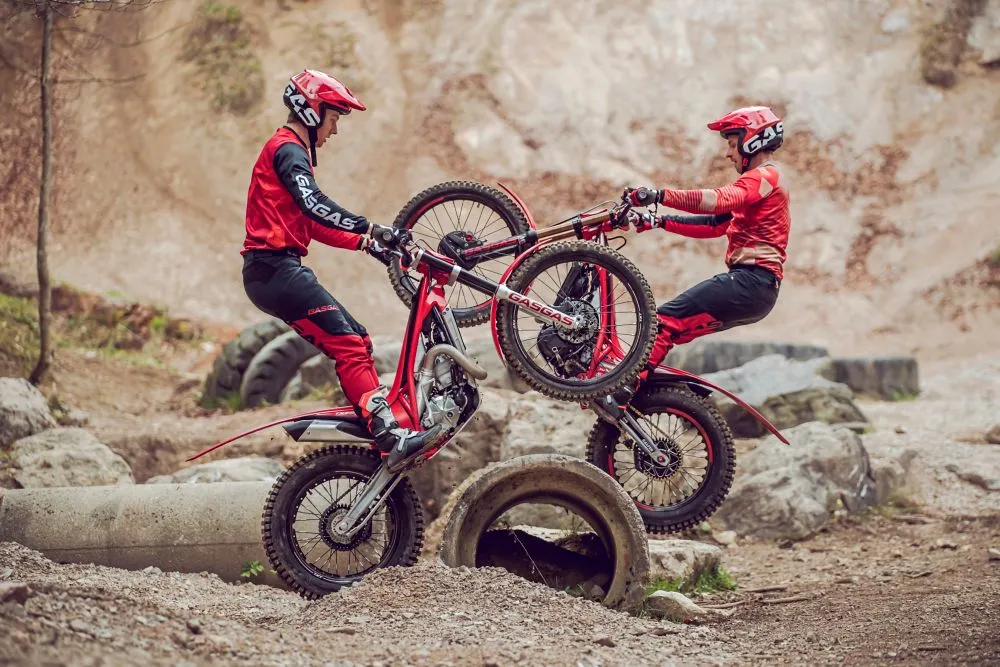
Is GASGAS Finished With Trials Bikes? KTM Crisis Raises Questions Over TXT Future
GASGAS has been one of the most recognisable names in trials for decades, but the future of its trials motorcycle range is becoming increasingly uncertain. Following the launch of its 2025 TXT Racing models, the brand has undergone major changes, including the withdrawal of its factory trials team and the announcement that trials motorcycle production would move away from Spain to Austria.
Those developments have left plenty of questions for trials riders. Has GASGAS stopped developing its traditional TXT trials bikes? Will the brand introduce a new generation of machines, or could the current situation mark the beginning of the end for one of the sport's most established manufacturers?
There is no official confirmation that GASGAS has permanently abandoned trials motorcycle production. However, the changes cannot be ignored, particularly when considered alongside the serious financial difficulties experienced by its parent group, KTM.
GASGAS Has Not Announced a New TXT Range Beyond 2025
The 2025 TXT Racing range represented the latest clearly documented generation of GASGAS's traditional trials motorcycles. The range included six models, with updates to components and specifications across the line-up.
Since then, there has been considerable uncertainty surrounding the future of the TXT range. GASGAS has not provided a clear public confirmation of a new 2026 or 2027 TXT Racing model range, leaving customers and dealers with questions about the next stage of the brand's trials development.
It is important, however, not to confuse a lack of a new model announcement with confirmation that production has stopped permanently. The company announced that trials motorcycle manufacturing would be transferred from its Spanish operation to KTM's facilities in Mattighofen, Austria. That was a production relocation, not an announcement that the TXT name or trials motorcycles were being discontinued.
The distinction matters. Moving production can create disruption, particularly when a manufacturer is restructuring its operations, but it does not automatically mean that a motorcycle range has reached the end of its life.
KTM's Financial Crisis Has Had a Major Impact on GASGAS
To understand why GASGAS has made such significant changes, it is necessary to look at the financial problems affecting the wider KTM Group.
KTM entered insolvency restructuring proceedings at the end of 2024 after experiencing severe financial and liquidity difficulties. The situation forced the Austrian manufacturer to make major changes to its business, including reducing stock levels, cutting costs and temporarily stopping motorcycle production.
Production was halted from December 2024 until March 2025 as part of the restructuring process. Further production interruptions followed during 2025 because of component availability problems.
The financial rescue involved Bajaj Auto, KTM's long-standing Indian partner and investor. Bajaj provided a major funding package to support the restructuring and ultimately took control of the group through its European operations.
The changes have continued beyond the initial insolvency process. In January 2026, the group announced another efficiency programme involving approximately 500 job reductions, alongside further efforts to simplify its organisation, reduce fixed costs and streamline its motorcycle range.
The parent company, formerly known as Pierer Mobility AG, has also been renamed Bajaj Mobility AG. KTM, Husqvarna and GASGAS remain its three core motorcycle brands.
Although KTM has worked to stabilise its business, the consequences of the financial crisis are still being felt across the group. Reducing costs, concentrating resources and prioritising the most commercially important products are understandable business decisions, but they can have consequences for smaller specialist motorcycle categories such as trials.
GASGAS Has Officially Cut Its Factory Trials Team
One of the clearest signs of the changes at GASGAS came in October 2025, when the company announced that it would no longer run a factory team in the FIM TrialGP World Championship or the Spanish Trial Championship from the 2026 season.
This was a significant decision for a manufacturer with such a strong history in the discipline. GASGAS had continued to invest in its factory trials programme, with Jaime Busto representing the brand at the highest level and regularly challenging the leading riders in the world championship.
Busto finished runner-up in both the 2025 TrialGP World Championship and the Spanish Championship, making the timing of the announcement particularly disappointing for the team.
GASGAS managing director Fabian Simmer explained that the decision was linked to the wider restructuring process within KTM. He also pointed to slowing global sales of trials motorcycles and the financial difficulty of maintaining a factory racing operation.
The company made it clear that the decision affected its factory racing involvement rather than its entire trials business. GASGAS said it would continue supporting privateer riders and independent teams through technical assistance and other forms of collaboration.
That distinction is important. GASGAS has stepped away from running its own factory team in the major championships, but it has not announced a complete withdrawal from trials competition or confirmed that its customer support for existing motorcycles is ending.
Production Moving From Spain to Austria
Another major development came in October 2025, when KTM announced plans to transfer GASGAS motorcycle production from its Spanish operation to Mattighofen in Austria.
GASGAS has strong Spanish roots, having been established in 1985 and building much of its identity around trials motorcycles. Its Spanish manufacturing operation therefore represented an important part of the brand's heritage.
The move was presented by KTM as a way of bringing production expertise together, improving efficiency and reducing complexity within the wider group. The relocation also came at a time when KTM was under considerable pressure to reduce costs and reorganise its manufacturing operations.
For trials riders, the important question is what happens next. Moving production to Austria could allow GASGAS to continue manufacturing its trials motorcycles within the group, but it also raises questions about how much investment will be made in developing the range.
There has been no official announcement confirming that the TXT range has been permanently cancelled. Equally, there has been no clear public commitment to a new generation of traditional TXT Racing models. Until GASGAS provides further information, the long-term position remains uncertain.
Could the GASGAS TXE Electric Trials Bike Be the Future?
One interesting part of the GASGAS trials story is the development of its TXE electric trials motorcycle.
GASGAS has been working on the TXE project for several years, with the prototype appearing in competition as part of its development programme. The company has explained that the bike was developed as a completely new electric platform rather than simply converting its existing petrol-powered TXT model.
The TXE was designed to deliver a trials riding experience while using an electric powertrain. GASGAS has discussed features including a multi-setting clutch, different engine maps and a transmission intended to retain some of the characteristics riders expect from a conventional trials motorcycle.
There are potential advantages to electric trials bikes. Reduced noise could make them attractive in areas where noise restrictions are an issue, while the ability to adjust power delivery could appeal to riders of different abilities.
However, GASGAS has previously explained that the TXE was still undergoing development and that further work was required before production. Its published prototype information did not provide a confirmed retail launch date.
It would therefore be wrong to assume that the TXE is definitely replacing the traditional TXT range. The electric project demonstrates that GASGAS has invested in trials development beyond its existing petrol-powered motorcycles, but its eventual production future needs to be confirmed by the manufacturer.
Will GASGAS Produce Trials Bikes Again?
There are reasons to believe that GASGAS could continue in the trials market, but there are also reasons to be cautious.
On the positive side, the company has specifically stated that its commercial trials activity would continue despite the withdrawal of its factory team. Its announcement also referred to developing and consolidating the brand's production and commercial operations, rather than abandoning trials motorcycles.
The decision to relocate production to Austria also leaves open the possibility of future TXT models being manufactured within KTM's facilities. From a manufacturing perspective, bringing production together could potentially make it easier for the group to control costs and manage its smaller motorcycle ranges.
However, the financial situation means that GASGAS will have to justify the investment required for new trials models. Trials is a specialist market, and the manufacturer itself has acknowledged that global sales of trials motorcycles have slowed.
With KTM concentrating on reducing costs, simplifying its model range and improving profitability, a major investment in a completely new petrol-powered trials platform may be difficult to justify unless the company can see a clear commercial opportunity.
That does not mean it will not happen. It simply means that riders should wait for an official announcement rather than assume that a new TXT is already on the way.
What Does This Mean for the Trials Market?
The uncertainty surrounding GASGAS is significant because the brand has been an important part of the trials market for many years. Its motorcycles have competed at the highest level, while its TXT range has been a familiar choice for club riders, experienced competitors and newcomers to the sport.
If GASGAS eventually decides to reduce its trials offering further, it would leave a gap in a market already served by a relatively small number of specialist manufacturers.
Brands such as Beta, TRRS, Sherco, Montesa and Vertigo continue to compete in the trials sector, with riders having several alternatives when choosing a new motorcycle. However, fewer manufacturers investing in trials development would not be good news for competition, product choice or the long-term growth of the discipline.
The withdrawal of the GASGAS factory team has already changed the competitive landscape. Jaime Busto's departure from the GASGAS factory programme and his move to Beta for 2026 provided a clear example of how the manufacturer's decision has affected the top level of the sport.
For existing GASGAS owners, the most immediate concern is likely to be parts availability, servicing and dealer support. The company specifically stated that its customer service, spare parts and official dealer network would continue, so there is no basis for assuming that existing TXT owners will suddenly lose support.
GASGAS Trials: A Brand at a Crossroads
GASGAS is not officially finished with trials, but its position is certainly very different from what it was just a few years ago. The loss of its factory team, the relocation of production and the lack of a confirmed new TXT model range have all created uncertainty around the future of the brand's trials motorcycles.
KTM's financial crisis provides important context. The group has had to restructure its business, reduce its workforce, streamline its operations and focus on financial stability. GASGAS is part of that process, and its trials programme has clearly been affected.
There are still reasons for optimism. GASGAS has stated that it intends to continue its commercial trials activity, and the move to Austria does not automatically mean the end of TXT production. The TXE electric project also shows that the brand has explored new technology within the trials category.
But until GASGAS confirms a new production plan or announces another TXT model, riders are left waiting for answers. The biggest question is no longer simply whether GASGAS will return to the world championship with a factory team. It is whether the company intends to keep investing in the trials motorcycles that helped establish its name in the first place.
For a brand with such a rich trials history, it would be a shame to see that identity gradually disappear. The next announcement from GASGAS could be particularly important for the future of the TXT range and its place in the trials market.